
Lunawood ThermoWood® Decking vs. Composite Decking


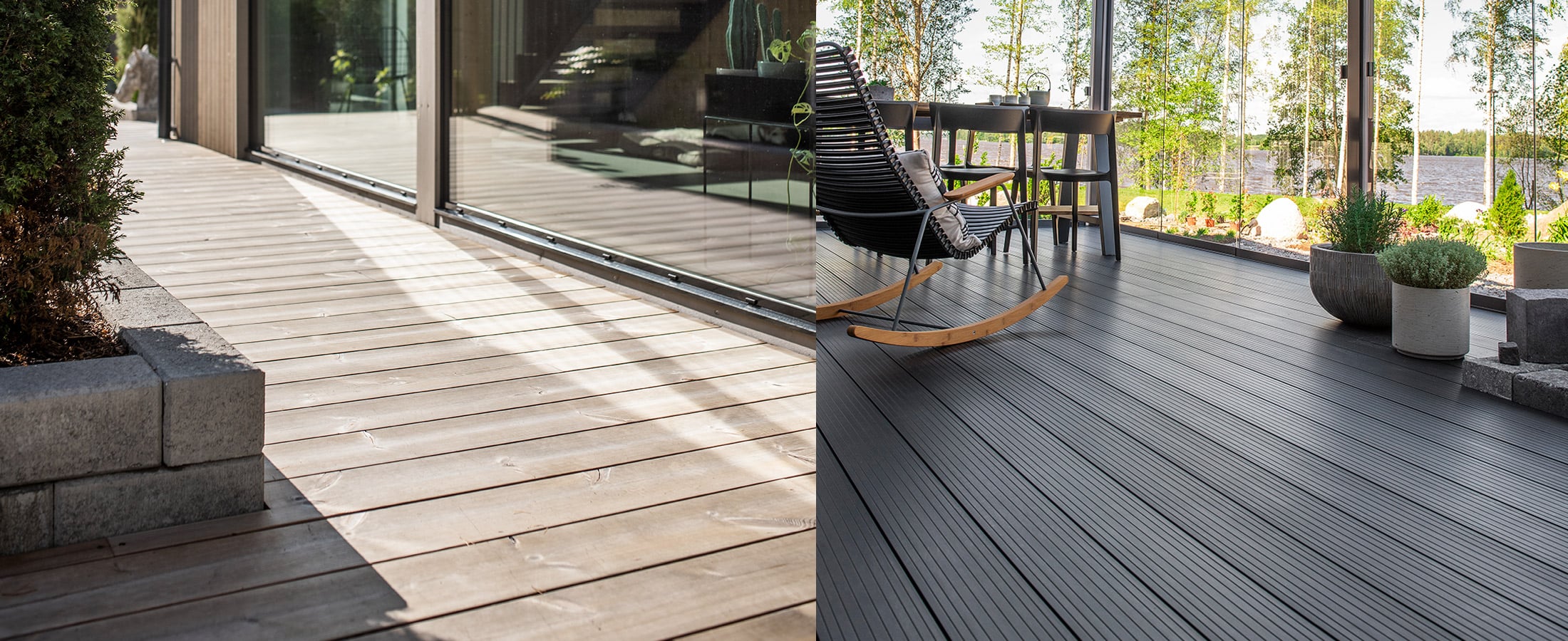
When specifying decking, durability and appearance are often the first aspects to evaluate. Today, however, strong lifecycle performance, user comfort, and low environmental impact matter more than ever.
For many architects and builders, the choice comes down to two fundamentally different material approaches: thermally modified natural wood and wood-plastic composite (WPC).
Although both materials are designed for exterior durability, their composition, structural behavior, and long-term environmental impact differ significantly.
This article outlines the key differences between Lunawood ThermoWood® decking and composite decking, based on measurable performance characteristics.
Lunawood ThermoWood® Decking
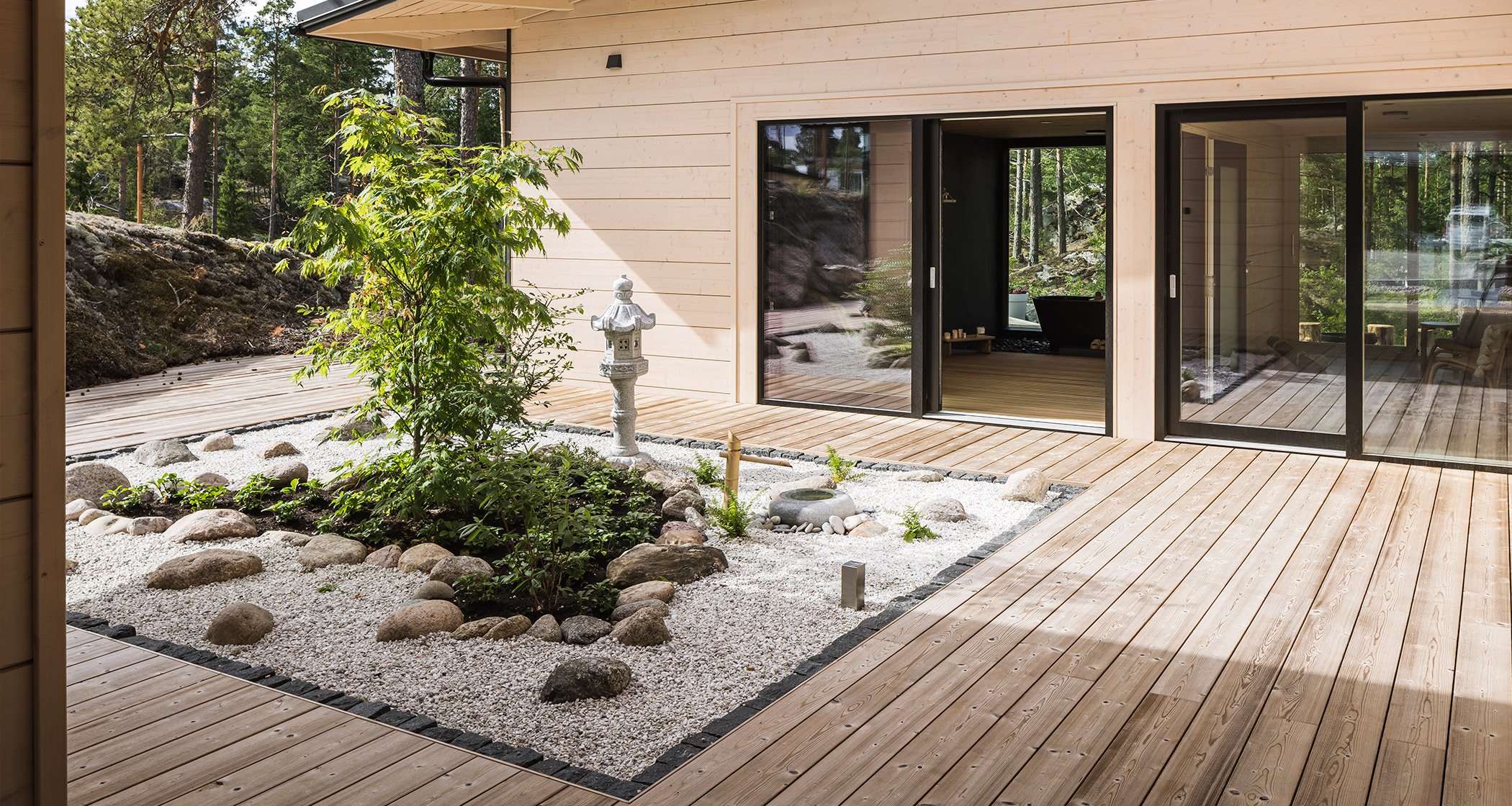
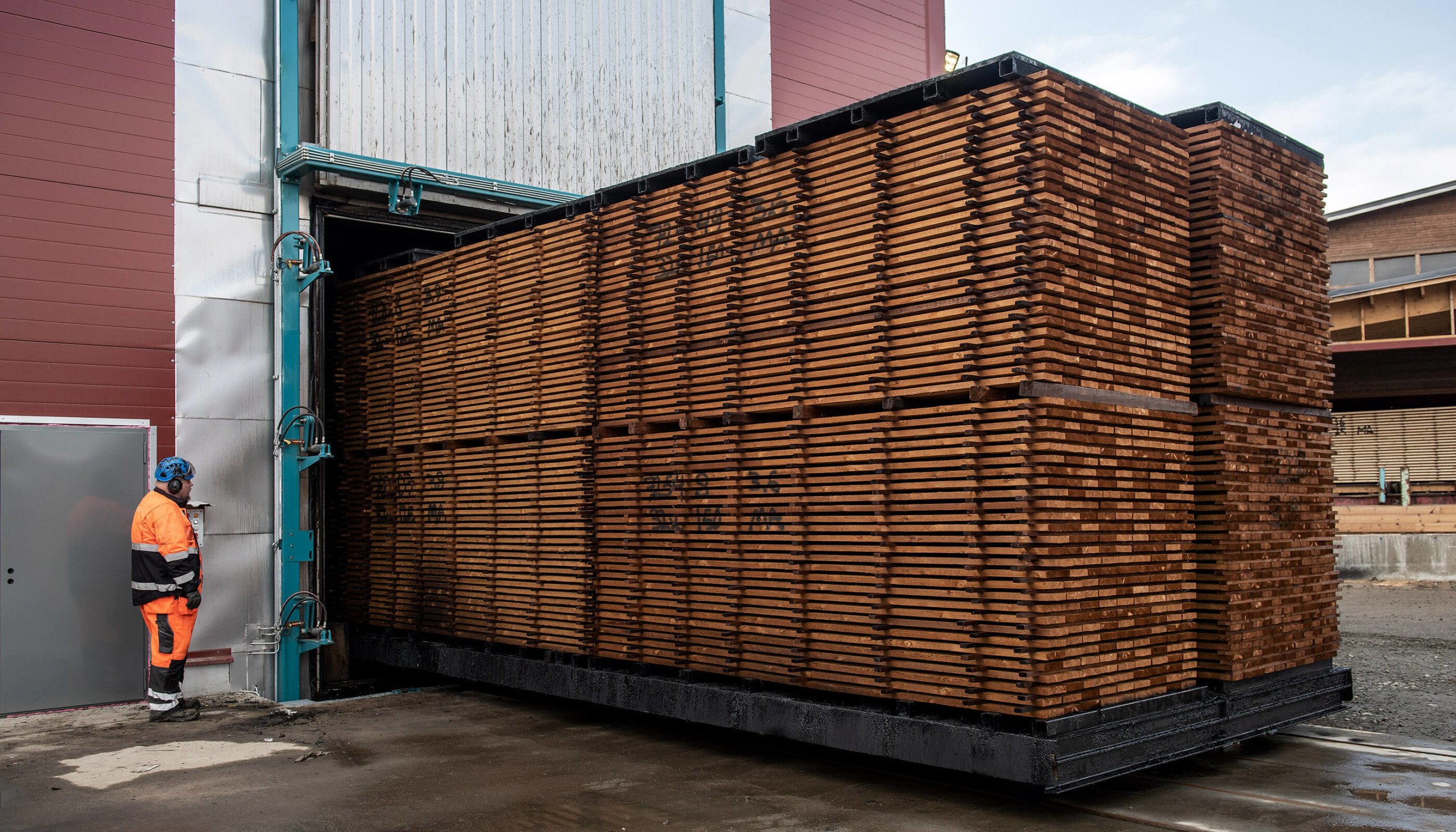
Lunawood ThermoWood® is made from Nordic pine and spruce and modified using only heat and steam to enhance the durability and stability of the wood.
The thermal modification process permanently transforms the wood at a structural level. By altering the cell structure using only heat and steam, the material becomes more stable and more durable — without the need for chemicals.
As a result, ThermoWood® offers:
-
Significantly improved dimensional stability
-
Enhanced resistance to decay (Durability Class 2)
-
Reduced moisture absorption and movement
-
Extended service life tested up to 30 years (BRE)
-
A rich, brown tone that runs consistently throughout the board
Lunawood ThermoWood® is produced from Nordic softwood sourced from sustainably managed forests. The wood raw material is PEFC-certified, and FSC®-certified options are available upon request. This ensures traceability and supports responsible forest management practices.
Composite Decking (WPC)
Composite decking consists of:
-
Wood fibers
-
Plastic polymers (PE, PP, or PVC)
-
Additives
It is manufactured in various countries depending on the brand, typically using globally sourced raw materials.
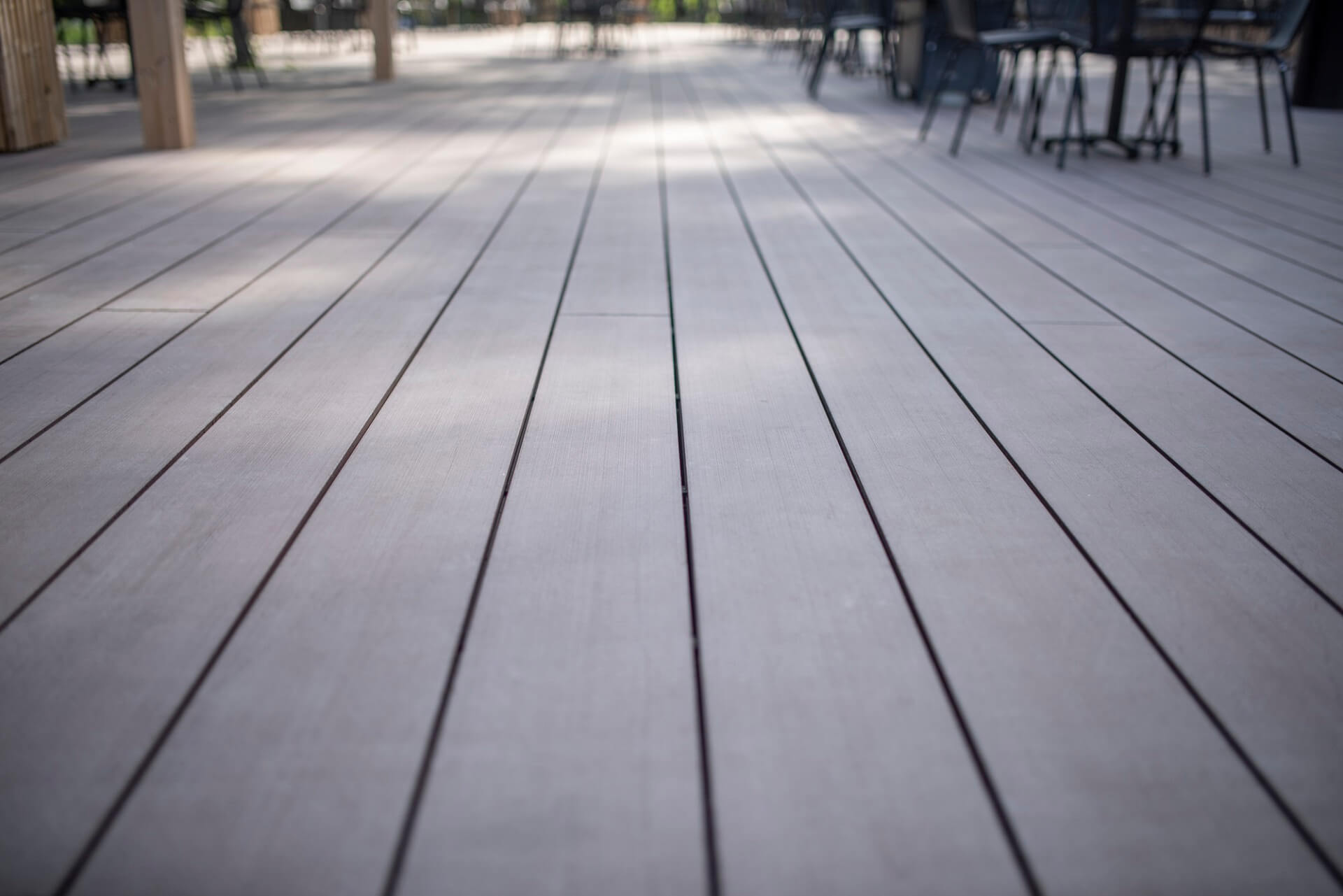
Composite products are engineered for high decay resistance and very low maintenance. However, they behave differently from natural wood — particularly in terms of thermal movement, structural performance, and surface temperature.
Performance Comparison
Service Life
-
Lunawood ThermoWood®: Approximately 30 years with proper installation (tested by BRE)
-
Composite decking: Typically 20–25+ years depending on the product
Dimensional Stability & Movement
-
ThermoWood®: Very high dimensional stability
-
Composite decking: Expands and contracts with temperature changes and typically requires tighter joist spacing (approx. 300–350 mm)
Thermal modification significantly reduces wood’s natural movement. Composite decking has a higher rate of thermal expansion, requiring careful detailing and precise allowance for movement — especially in warm climates or large terrace applications. When aiming for clean lines and precise detailing, understanding movement behavior is critical.
Resistance to Rot
-
ThermoWood®: High (Durability Class 2 = Durable)
-
Composite decking: Very high (Durability Class 1 = Very Durable)
Both materials are suitable for exterior use. Composite achieves high biological resistance due to its plastic content. ThermoWood® achieves durability through modification of the wood structure itself and is suitable for above-ground applications where the material is not in direct ground contact.
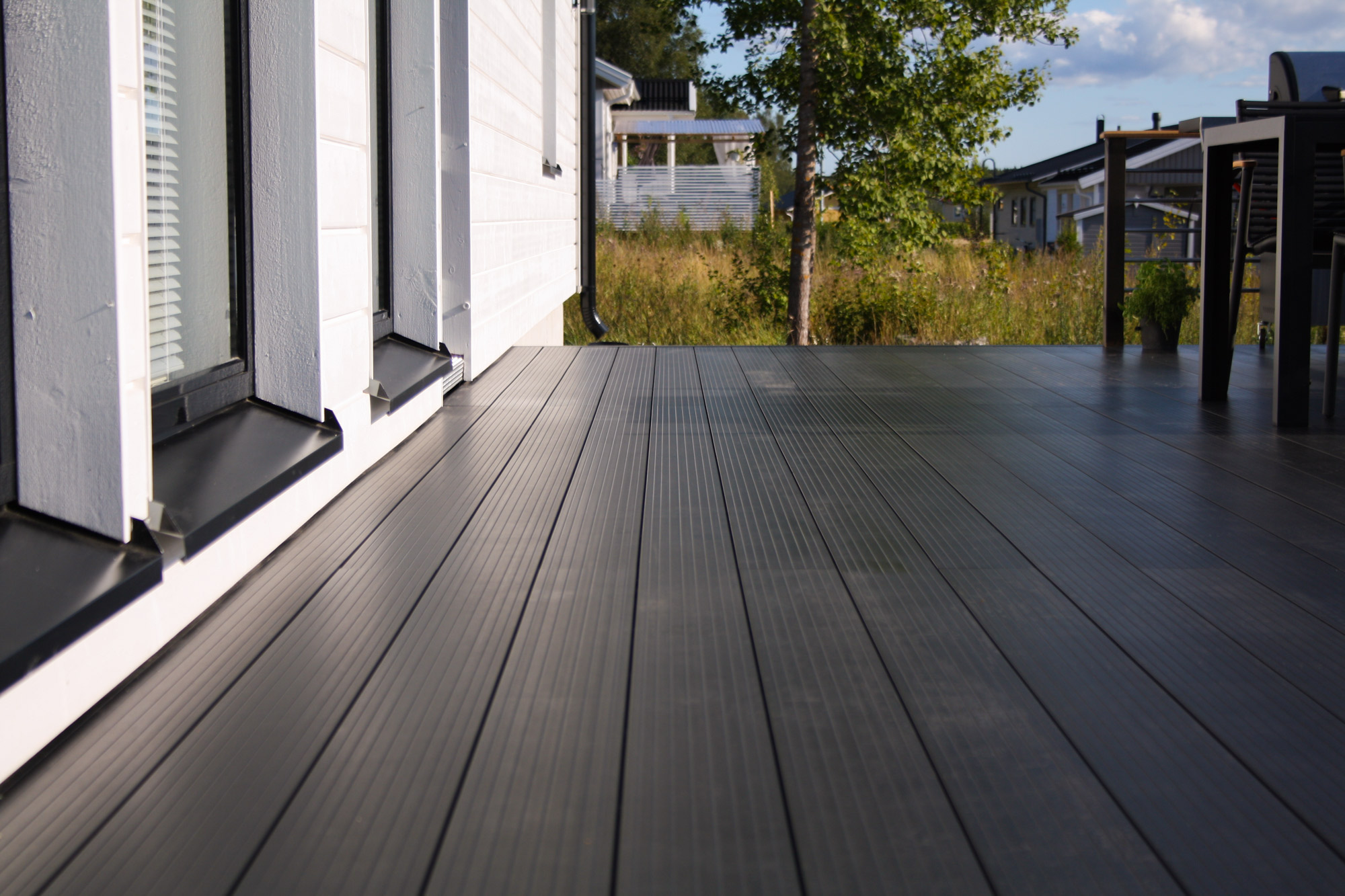
Surface Temperature in Direct Sunlight
-
ThermoWood®: Approximately 35–55°C (95–131°F) in direct sunlight
-
Composite decking: Approximately 50–80°C (122–175°F)+ depending on color
In barefoot environments — residential terraces, hospitality decks, and pool areas — surface heat becomes a defining performance factor. Natural wood remains noticeably cooler than many composite alternatives, particularly in darker shades.
Structural Performance & Weight
-
ThermoWood®: Lightweight and easy to handle on site
-
Composite decking: Heavier, with bending strength depending on formulation and typically lower than solid wood
From a construction perspective, lighter boards improve installation efficiency and reduce handling strain. Structural behavior must always be evaluated alongside joist spacing and span requirements.
Sustainability and Circularity
Raw Materials
-
ThermoWood®: Renewable Nordic softwood from sustainably managed forests (PEFC-certified; FSC® options available)
-
Composite decking: Wood fibers combined with fossil-based plastics
Manufacturing
-
ThermoWood®: Modified using only heat and steam
-
Composite decking: Energy-intensive production involving plastics
End of Life
-
ThermoWood®: Can be reused, recycled as biomass, or biodegrade naturally
-
Composite decking: Limited recyclability and not biodegradable
Maintenance
-
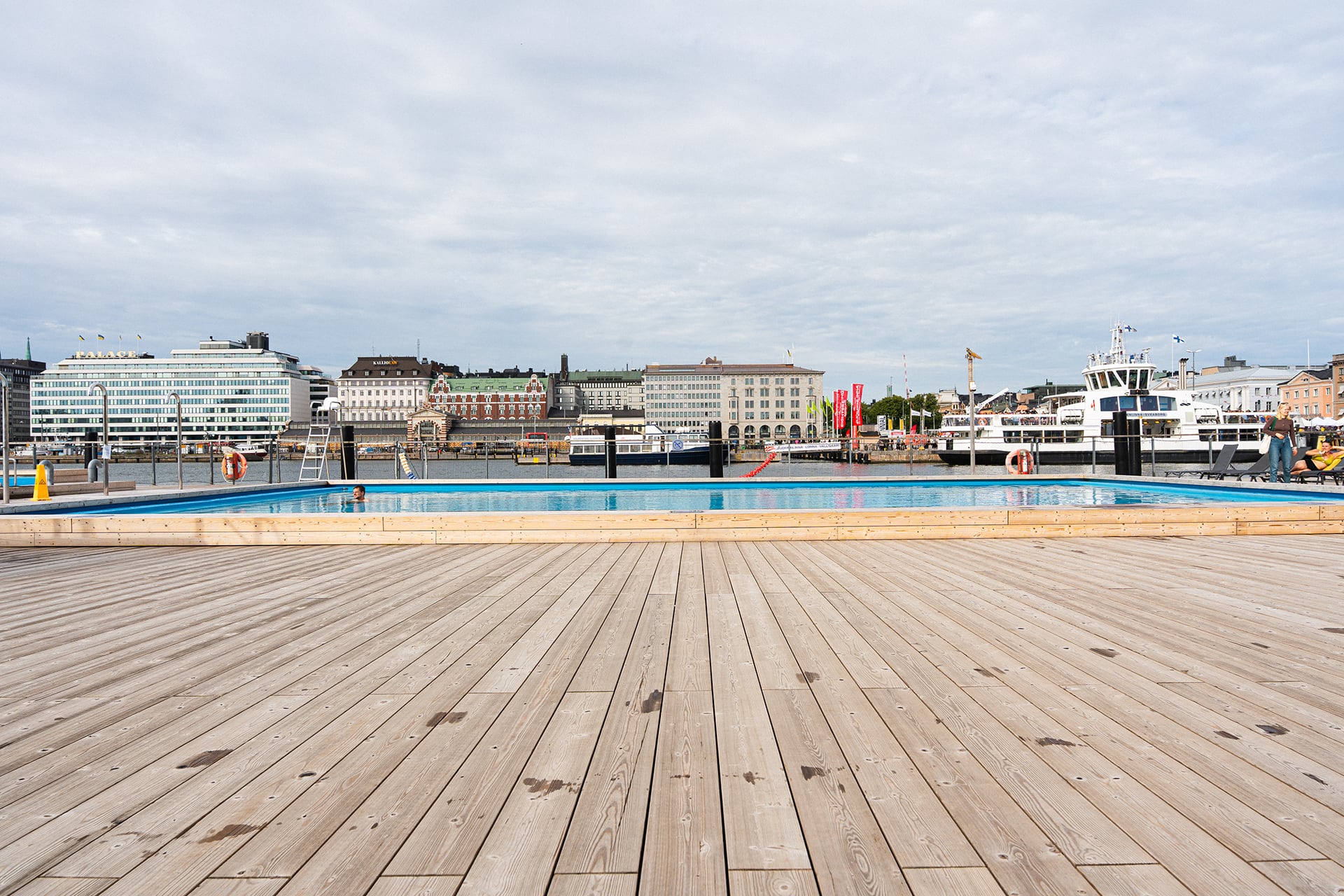
ThermoWood®: Low maintenance; no surface treatment required if natural greying is accepted
-
Composite decking: Very low maintenance; typically requires cleaning only
Lunawood ThermoWood® will gradually develop a silver-grey patina if left untreated — a natural aging process that many architects intentionally specify. If maintaining the original brown color is preferred, ThermoWood® decking requires surface treatment with a pigmented surface treatment product.
Key Takeaways
The decision between ThermoWood® and composite decking involves technical, architectural, and environmental considerations. After all, decking is not only a surface—it is a lived space shaped by climate, light, and time. The material defines how the space performs, feels, and ages.
Lunawood ThermoWood® is often specified for projects requiring:
- Authentic natural wood appearance and tactile qualities
- Dimensional stability with minimal movement
- Long lifecycle performance
- Certified, renewable raw materials
- Chemical- and toxin-free composition
- Low carbon footprint
- Low surface temperatures in outdoor conditions
Composite decking may be suitable when a project prioritizes:
-
A synthetic and uniform appearance that doesn’t change
-
Maximum biological resistance
-
Minimal visible aging
- Extremely low maintenance
Tools for your design
Lunawood Design Tools are available for architects and designers for Lunawood’s Nordic thermally modified wood products. Lunawood Design Tools consist of 3D BIM objects for ArchiCAD and Revit and Rendering images. All these are free of charge.